As Head of Learning and Leadership at Anglicare Sydney, I led the design and launch of the Anglicare Academy. Anglicare is a large Christian care organisation working across aged care, community services and housing, with more than 6,000 staff at over 100 sites. This is the story of how the Academy was built, what it achieved, and what other organisations can take from it.

The challenge
In late 2024, learning at Anglicare was fragmented, course-based and hard to scale across a dispersed workforce. Leaders were stretched, frontline teams needed more practical support, and development wasn't consistently linked to business priorities, culture or performance. The goal was to move from reactive training to a learning system that people could see, find and use, and that the business could measure.
Anglicare's own engagement data pointed the same way. In 2024 we learned that one of the strongest drivers of staff engagement was opportunities for growth on the job. The Academy was launched in 2025 to provide those opportunities, equip staff to thrive and bring Anglicare's employee promise to life: Know you can, Believe we will.
Start with consultation, not content
Before designing anything, we spent six months listening. From mid-2024 we held one-to-one conversations with every executive and senior HR leader to identify the capability gaps and performance blockers affecting Anglicare's five performance areas: Mission, Customers, People, Resources and Effectiveness. We then tested those insights through an organisation-wide survey of people leaders, with 217 responses, and played the findings back to each level of management.
The consultation changed the design. The executive assumption was that the biggest need was specific management skills. The evidence showed that leaders, especially senior leaders, felt an even greater need to grow in leadership character. So every offering was built with a dual focus: fruitfulness (competence) and faithfulness (character).
From courses to pathways
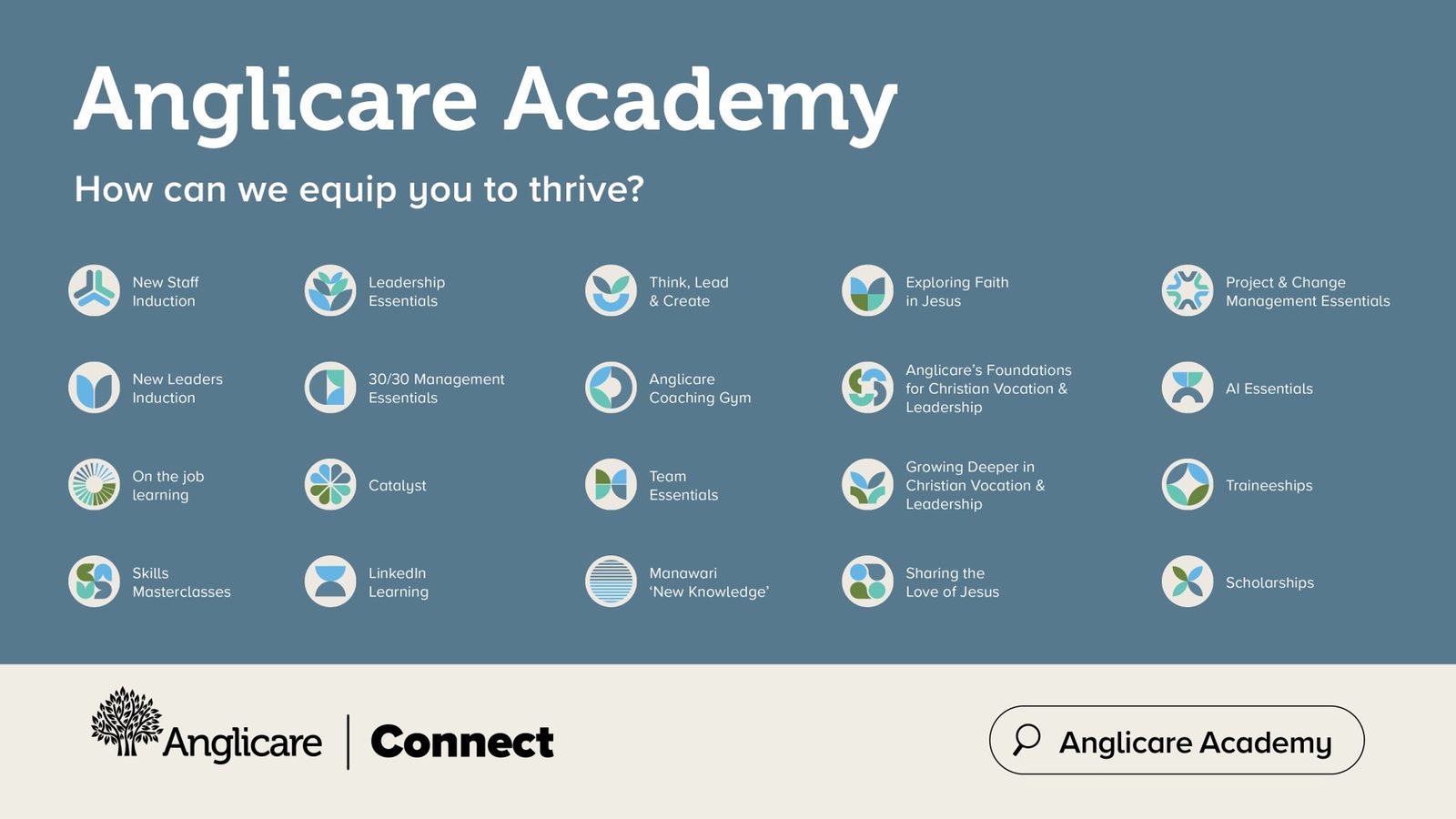
The Academy replaced a catalogue of courses with eight role-based pathways across four levels: individual contributors, people leaders, heads of department, and general managers and executives. Trimester intakes and a simple intranet and learning-system roadmap made development visible and easy to act on.
We worked with a product mindset. Offerings launched as minimum viable products, participants acted as co-design partners, and we iterated quickly before scaling. Over 2025 the Academy grew from five standardised offerings to around 20, each customisable for business units and teams, and almost all delivered in-house.
Designed for the 70%
Most learning happens on the job, so every pathway was built around the 70 in 70/20/10. Participants made 30-day and 100-day workplace commitments, had reflection and action conversations with their line manager, and learned alongside peers in coaching circles, buddy pairs and cohorts. Selected pathways added AI-enabled reflective practice and role-plays through Coach M and the LinkedIn Learning Hub. One principle ran through all of it: connection before content.
Metrics that matter
Every offering was measured against Anglicare's five performance areas using Kirkpatrick's four levels: reaction, learning, behaviour and results. Attendance was no longer the headline. Comparing 2025 with the 2023 baseline:
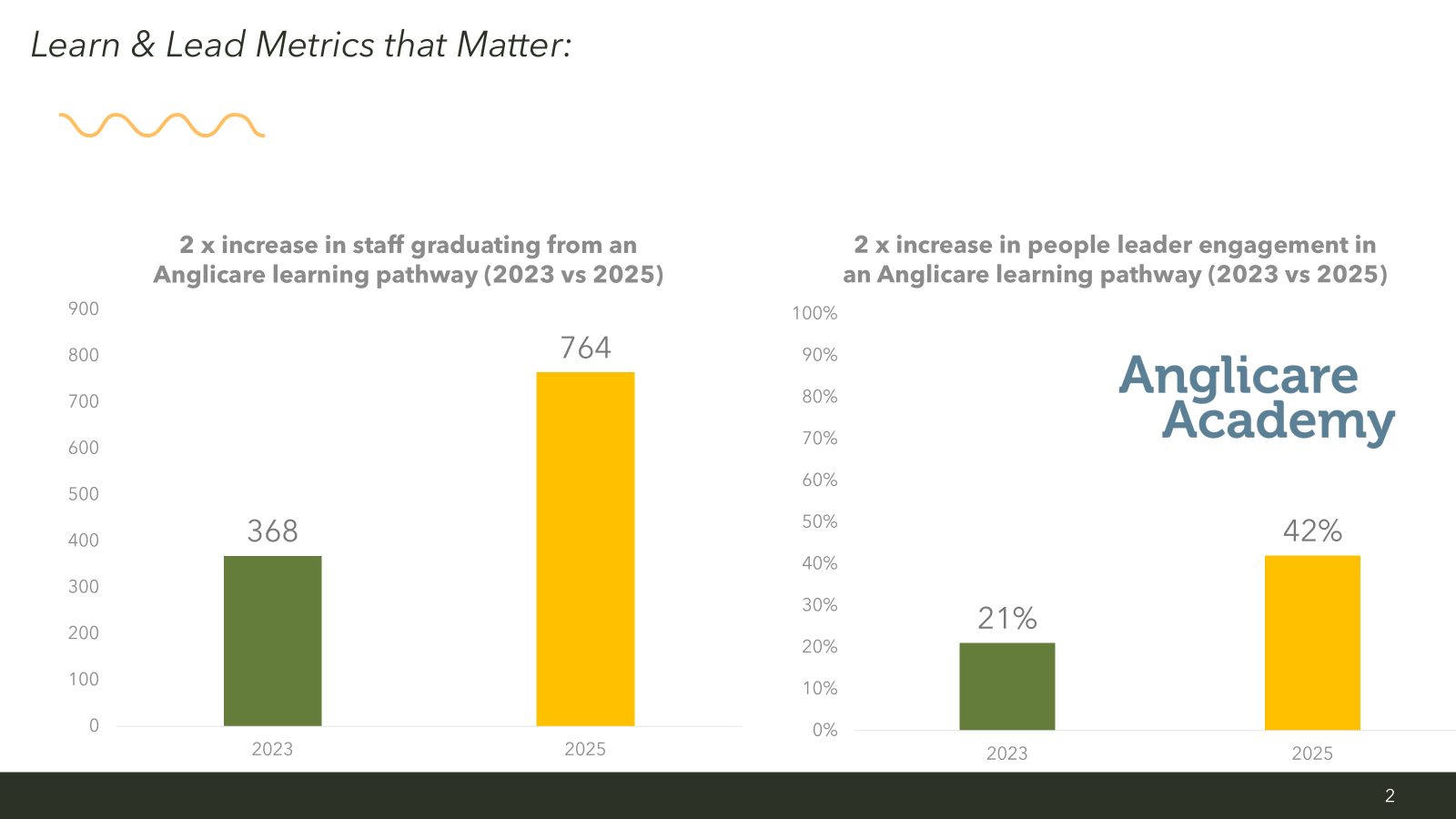
- Reach doubled. Unique learners rose from 340 to 680, and graduates from 368 to 764.
- Leaders engaged. People leader pathway participation rose from 21% to 42%, well above the 30% target.
- Learning landed. Median participant NPS was 77 against a target of 40. 97% understood the content and 90% felt confident to apply it on the job.
- Behaviour changed. Focus behaviours shifted by an average of 25% from pre to post, ahead of the 20% target.
- Managers saw it. Line manager NPS reached 50 against a target of 25. 75% of line managers observed a clear change in mindset, skill or behaviour, 79% saw learning applied day to day and 73% said it had been sustained.
- Compliance improved. Mandatory training completion rose from 75% to 94%.
- More for less. Graduates per Learn & Lead team member rose from 47 to 132, almost three times as many, with a smaller team. Learning cost per staff member fell by 36%.
- Mission connected. 80% of learning was integrated with Anglicare's vision, mission and values, against a 60% target.
Recognition
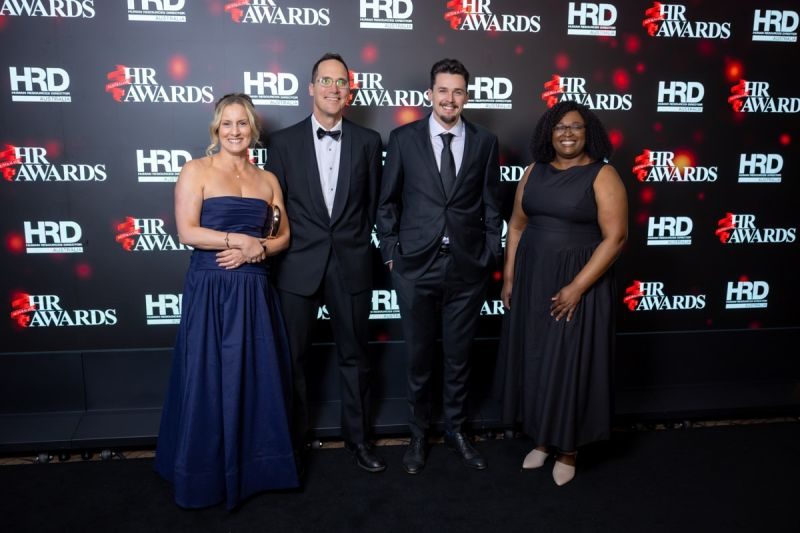
In September 2026 the Anglicare Academy won the Human Resources Director (HRD) Australia award for Best Learning & Development Program at the Australian HR Awards. The national award recognises excellence and innovation in learning and development, assessing organisations on strategy, implementation and measurable results. The Academy was also a finalist for Best Learning & Development Strategy at the 2026 AHRI Awards.
This recognition belongs to the many people who helped shape, support, facilitate and participate in the Anglicare Academy. It is a true team achievement and a celebration of what is possible when learning is connected to purpose, people and impact.
Mike Pola, Head of Learning and Leadership Development, Anglicare Sydney (Anglicare Sydney on LinkedIn)

What other organisations can take from it
Listen first
Consult leaders one to one and test assumptions with data before designing anything. The real need may not be the one you expected.
Pathways, not courses
Organise development by role and level so people can see where to start and what comes next.
Design for the 70%
Build workplace commitments, manager conversations and peer learning into every offering.
Measure what matters
Tie learning to business performance areas and track behaviour change, not just attendance.
Connection before content
People learn and change with others. Make belonging and purpose part of the design.
These are the same principles behind the 5Ps and every Potential2Performance Capability Development Sprint. If you'd like to build something similar for your organisation, let's talk.