In residential aged care, Care Managers and Care Coordinators are the most influential frontline leaders. At Anglicare Sydney they lead around 70% of the Residential Care workforce, many with more than 50 direct reports, in a 24/7 environment. As Head of Learning and Leadership, I led our team's work with Residential Care clinical leadership to adapt the Anglicare Academy's Think-Lead-Create coaching program into a pathway built specifically for them.
The challenge: “no subtraction, only addition”
Care Managers described their role as “no subtraction, only addition”. They were caught in an escalation avalanche, with their time consumed by reactive, low-value interruptions instead of oversight, team development and resident care. Many were overwhelmed and at risk of burnout. Residential Care's strongest engagement driver, “Management Support – Care”, sat below both Anglicare and industry benchmarks, even though managers were working hard and with good intent.
The goal was clear: shift these leaders from directing and solving everything themselves to coaching, delegating safely and building teams who could think and act with less dependence on them.
Built with the business
The pathway was co-designed with the Residential Care clinical leadership team and sponsored by the Group Executive, so it addressed live operational pain points rather than generic leadership theory. Participants helped define the problem by mapping the recurring conversations and tasks in their own roles against a situational leadership model: what should be directed, coached, supported or delegated.
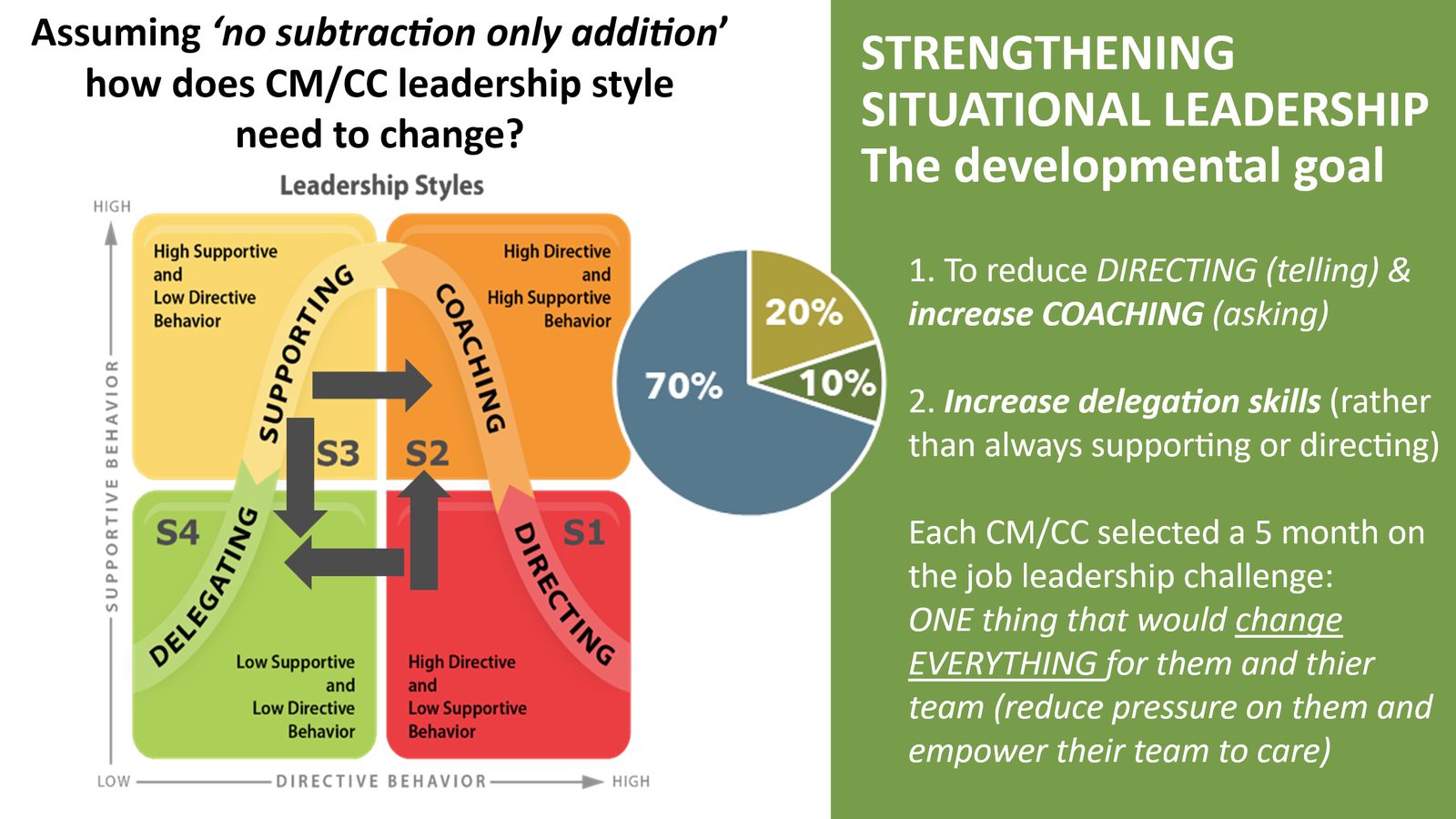
Safety stayed at the centre. Leaders learned when not to coach: urgent clinical decisions, safety-critical issues, policy requirements and formal performance matters remained clear directing moments. A “smart trust” approach helped them weigh risk, readiness and credibility before handing over responsibility, so delegation never weakened governance or escalation.
Learning in the flow of work
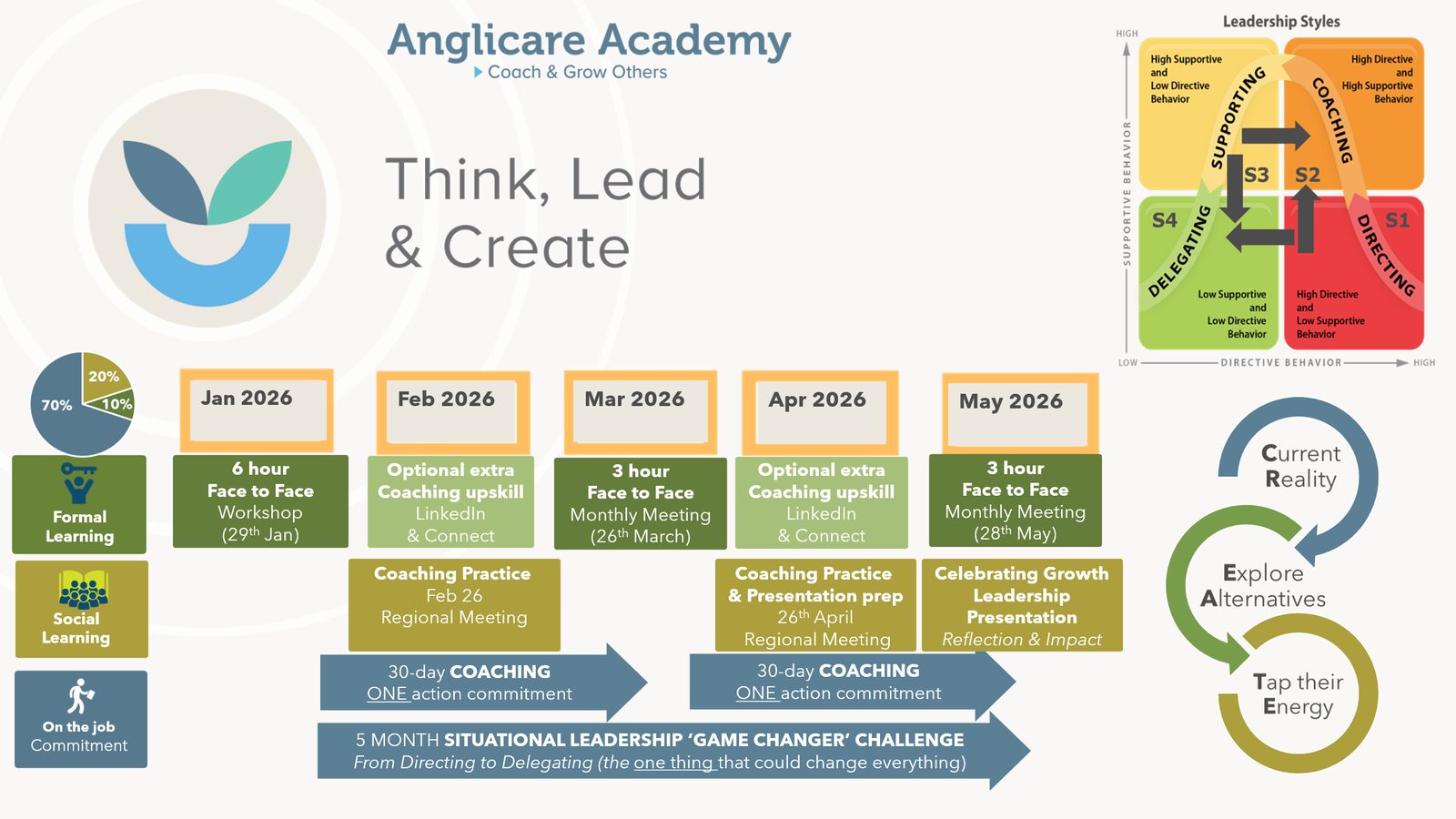
Rather than taking leaders away from their homes for days of training, the pathway ran from January to May 2026 inside existing Care Manager and Regional Meeting rhythms. It combined face-to-face workshops, a coaching buddy for every participant, facilitated coaching practice in small groups, three 30-day action commitments and optional digital learning.
At its heart was a five-month “Game Changer” challenge. Each leader chose one responsibility that, if moved from directing to delegating, could change everything for them and their team. Choices included incident investigations, care conferences, audits, outbreak responses, toolbox talks, staffing, meeting minutes and clinical ordering.
Results
- Reach. 45 leaders, around 90% of the intended Care Manager and Care Coordinator cohort, completed all five months and presented their results to the Residential Care leadership team.
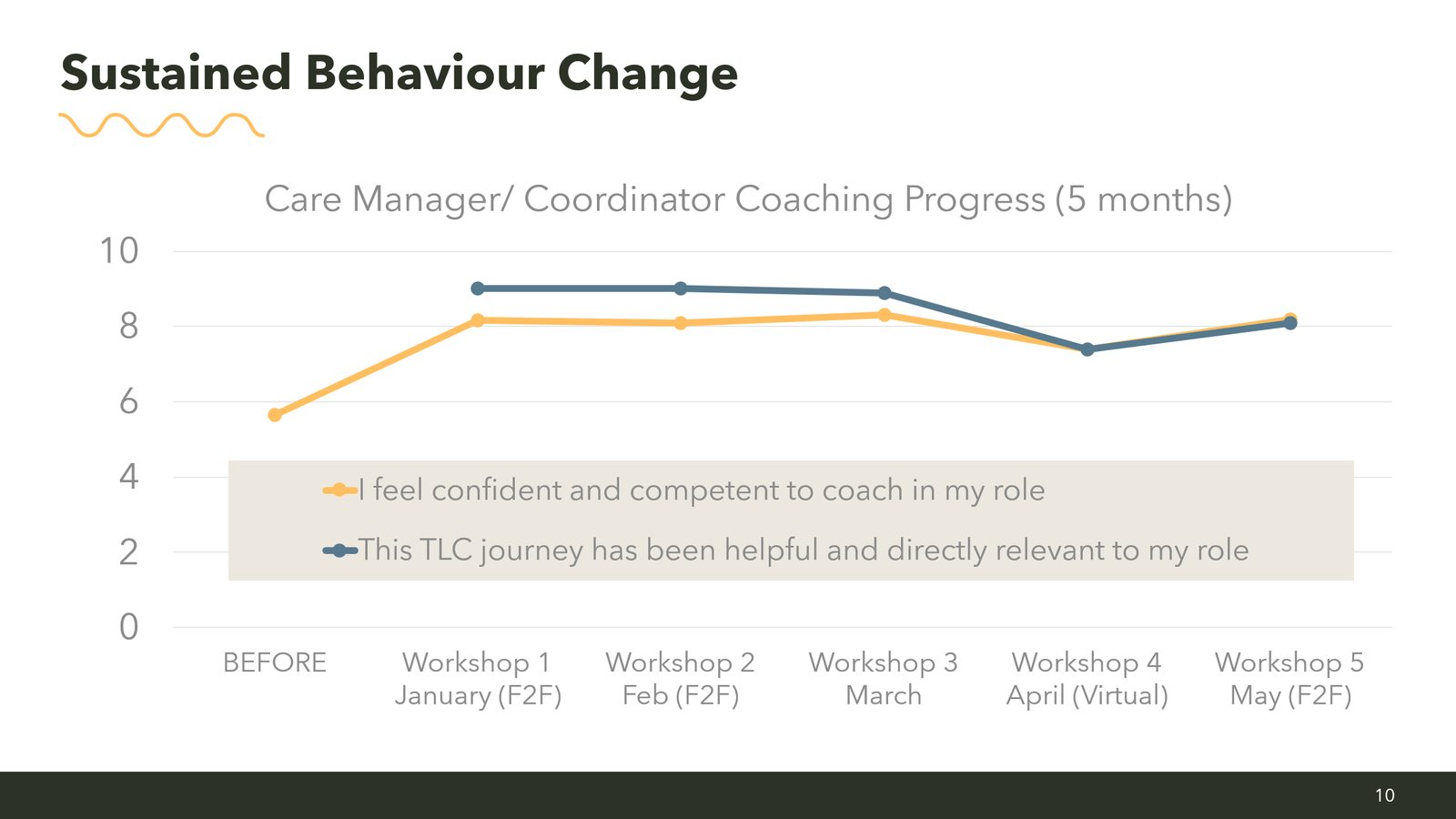
- Capability. Self-assessed coaching confidence and competence rose from 5.6 to 8.1 out of 10, a 43% uplift, and stayed high across the journey. More than 94% felt confident to apply the learning in their role.
- Endorsement. The program achieved an NPS of +49 with zero detractors.
- Business impact. Line managers rated their satisfaction with the team and business impact at an NPS of +31, and their likelihood to recommend the pathway to other line managers at more than +60.
- Demand for more. Support for extending a similar pathway to Registered Nurses reached an NPS of +64.
From doing to developing
The strongest evidence came from the 45 final presentations. Across homes, leaders told the same story. Before, they felt responsible for everything, solved the problems and carried the workload, and their teams depended on them. After five months, they were asking questions instead of giving answers, trusting and delegating to their teams, and finding more time for leadership, residents and quality.
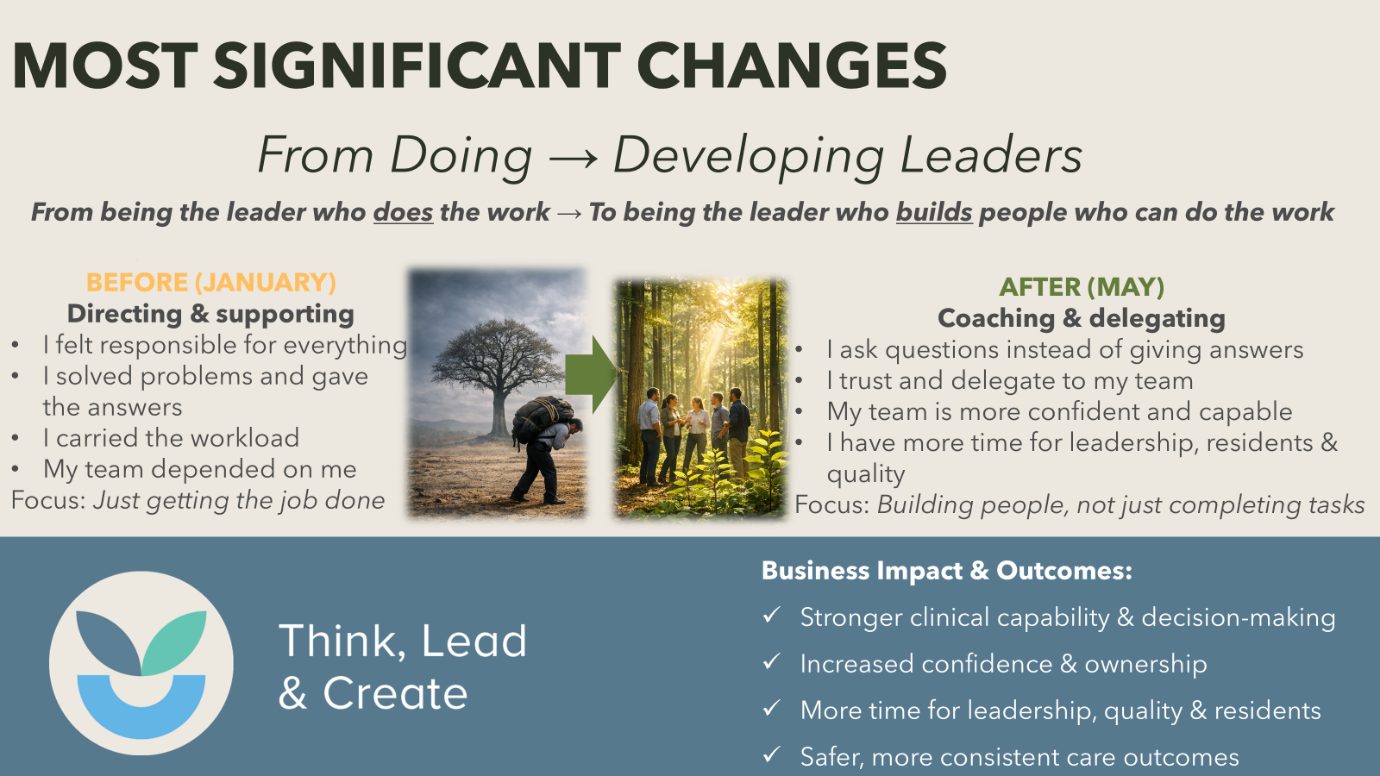
Responsibilities such as incident investigations, care coordination and team communication were owned at the right level instead of being escalated. Leaders reported less reactive pressure, fewer after-hours calls and more confident teams, with stronger clinical judgement at the frontline. Because the same shift appeared across many homes, it showed the approach was repeatable, not a one-off.

Participants also asked for more: a similar pathway for high-potential Registered Nurses, which is now being co-designed. Longer-term impact will be tracked through the “Management Support – Care” engagement driver, retention of Care Managers and succession readiness.
What other organisations can take from it
Design for the role
Build development around the real tasks, pressures and language of the people doing the job.
Teach when not to coach
Pair coaching with situational leadership so delegation is safe and governance stays clear.
Make it live
Ask each leader to change one real responsibility at work, not practise on hypothetical cases.
Work in their rhythm
Embed learning in existing meetings so busy frontline leaders can take part.
Let leaders show the change
Final presentations turn learning into evidence and build a shared leadership language.
The same approach sits behind Potential2Performance's Leadership Coaching and Team Effectiveness Sprints. If your frontline leaders are carrying too much, let's talk.