Oman Sail is a government organisation in the Sultanate of Oman with a national mission: to rekindle Oman's maritime heritage, promote Oman around the world through sailing and create learning opportunities for young Omanis. It has more than 200 Omani employees.
From September 2019 to November 2020, I worked at Oman Sail full time as a consultant through Creative People Solutions. As Lead Programme Designer and Facilitator, I designed and delivered a seven-week Graduate Development Programme, customised teambuilding for corporate clients and a five-level schools programme, and trained 12 high-potential Omani staff as facilitators through a three-month Train the Trainer program. When the pandemic paused face-to-face training in March 2020, my role shifted to consultant and coach, leading an integrated process of culture change. This case study covers the first three months of that work, from May to July 2020.
Stage 1: Understand the current culture
With a new CEO in place, I made the case for culture change to the CEO and Directors. With their approval, I held confidential one-to-one interviews with every member of the Management Team and 80% of managers: 29 interviews in all, more than 70% with Omani leaders. Each explored three questions: what the culture is like now, what excellence looks like, and what matters most.
Leaders valued a warm, family-like team environment, youthful energy, national pride and professionalism. They were equally clear about the gaps: departmental silos, no unifying purpose, limited development and empowerment of local leaders, low accountability, little recognition, and communication that relied on informal channels rather than shared direction. Managers' ratings against the five elements of healthy teams confirmed the same priorities: accountability, communication and conflict, and a focus on collective results.
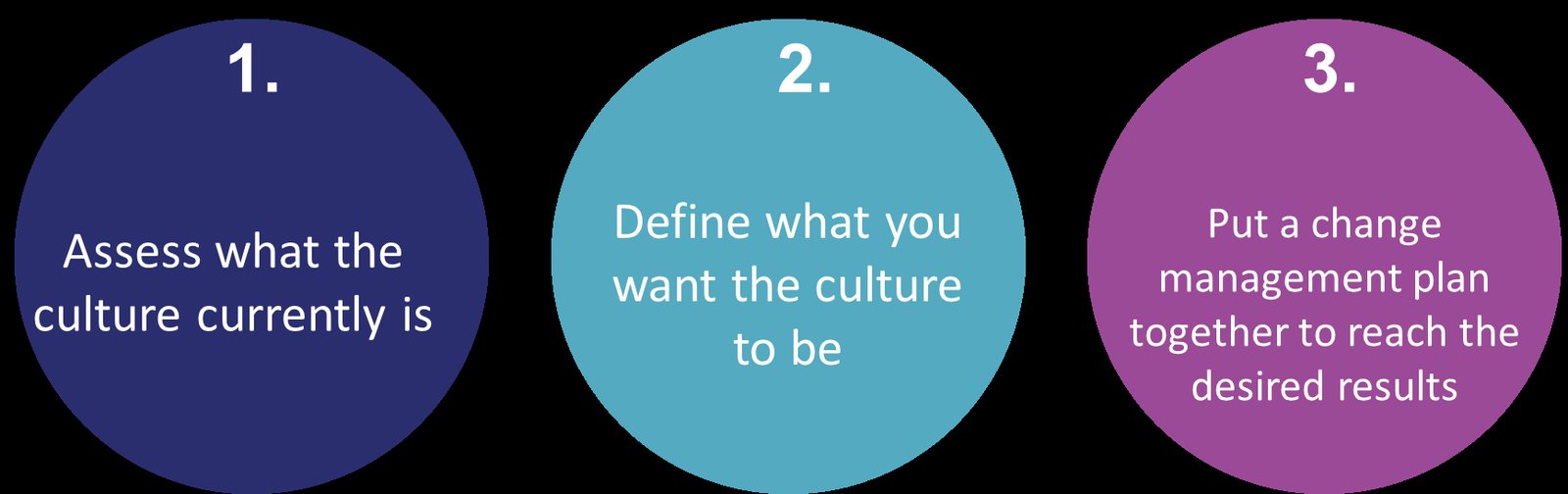
Stage 2: Define the desired culture
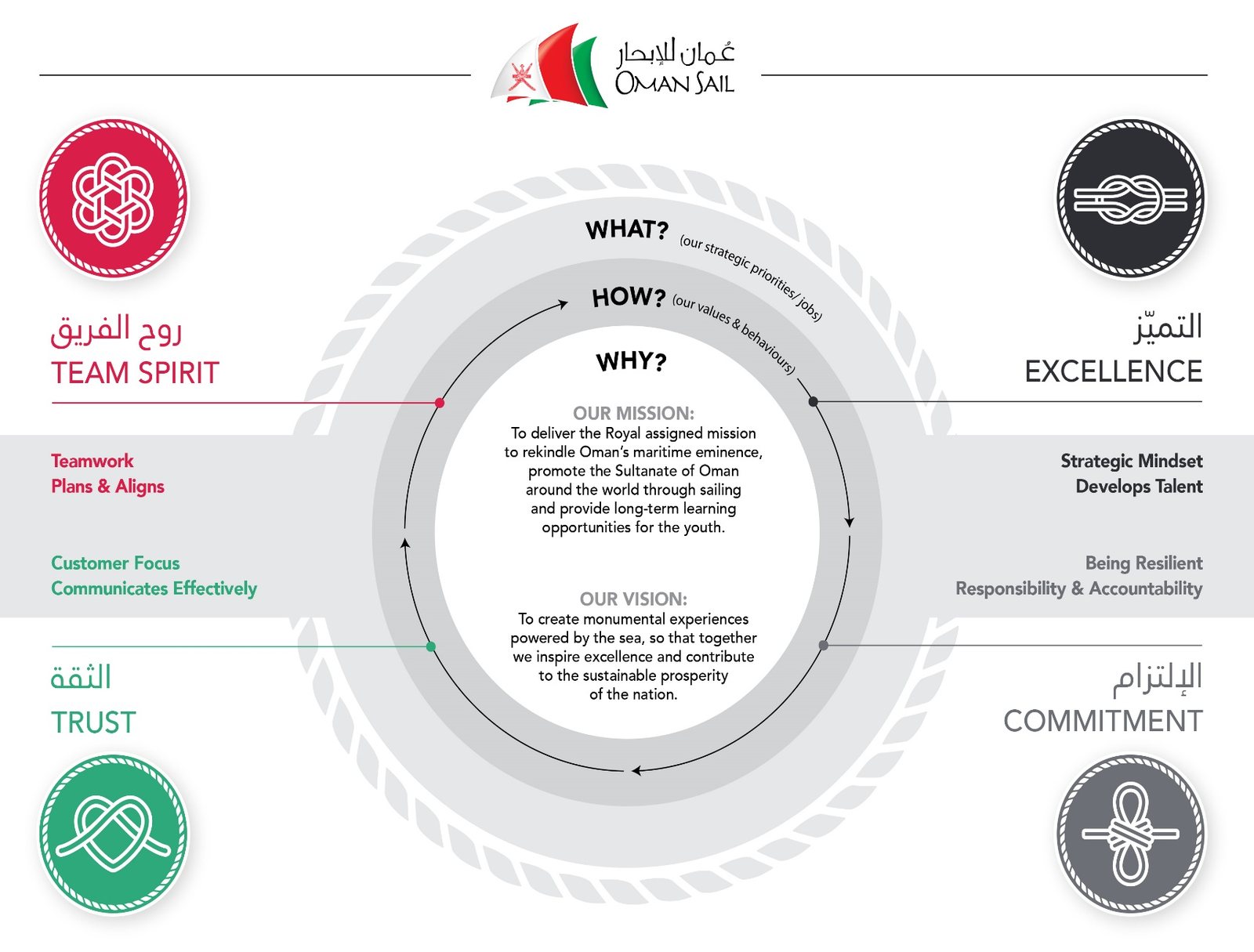
The Management Team had spent months on a five-year strategy, their “what”. I advised them to pause until their “why” and “how” were clear. Two half-day workshops affirmed the mission and shaped a more inspiring shared vision.
Values had to come from the bottom up, not just the top down. I designed a 45-question survey in Arabic and English, based on 38 behavioural competencies and seven candidate values, and 100 employees from every level responded, about 55% of staff. Their answers were compared with managers' views of the behaviours that define excellence. The Management Team agreed four values (Team Spirit, Excellence, Trust and Commitment) and eight behaviours, and the Board approved the new mission, vision, values and behaviours. Oman Sail's own design team then brought them to life visually.
Stage 3: Lead the change
Culture change means aligning people, processes and systems with the new why and how. I followed Kotter's eight steps for leading change, and built a toolkit for each step, from the case for change and stakeholder analysis to change readiness, managing resistance and measuring success. A single project plan from May to November 2020 kept every step on track.
- A coalition for change. I chaired a weekly Change Management Committee with the HR Director and the Heads of HR, Communications and Marketing. Together we selected Change Navigators: positive influencers and strong communicators from across the organisation, half men and half women. The result was a coalition of more than 30 champions for change.
- Coaching the leaders of change. Fortnightly coaching for two Management Team members and the Heads of HR and Communications focused on four pillars: leadership, capability, communication and accountability. “Manager as Coach” workshops helped Change Navigators shift from telling and directing to asking and empowering.
- Leadership at every level. Five monthly “hour of power” workshops, built on the five practices of exemplary leadership, equipped the Management Team, managers and Navigators with personal and team action plans.
- Every team engaged. A three-hour experiential workshop, delivered online, reached every team: 15 workshops and 160 employees. Each team then moved straight into team coaching to agree a START, STOP and CONTINUE plan for the behaviours they would strengthen together.
- Measuring the gap. A personal and team satisfaction survey, combining Gallup's Q12 engagement questions with 14 questions on the new values and behaviours, set the baseline: overall team effectiveness of 69% against a desired 87%. Each Change Navigator received their team's results benchmarked against the organisation, with responsibility for closing the gap.
The process also began reviewing processes, policies, organisational structure, roles and KPIs so they would reinforce the new culture rather than work against it. A final session with the Change Navigators and the CEO agreed recommendations on the two biggest development areas: communication, and responsibility and accountability.
What changed in three months
- From no shared why to a clear one. A Board-approved mission, vision, four values and eight behaviours, shaped by 29 leaders and 100 staff.
- A coalition, not a consultant. More than 30 change champions equipped with toolkits, coaching and a clear plan.
- Every team involved. 15 team workshops, 160 employees, and a team action plan for every team.
- A measured starting point. A baseline of 69% team effectiveness against an 87% goal, with my contract extended for a further three months to help close the gap.
Michael has been a coach and catalyst for both our leaders and teams to work more effectively together.
Dr Khamis Salim Sulaiman Al Jabri, Chief Executive Officer, Oman Sail (letter of reference, November 2020)
What other organisations can take from it
Listen before you act
Confidential conversations with leaders reveal the real culture, and build the case for change.
Why and how before what
Clarify purpose and values before finalising strategy and plans.
Values from the bottom up
Give every employee a voice in defining what excellence looks like.
Build a coalition
Change needs champions across the organisation, not just a project team.
Measure the gap, team by team
A clear baseline turns culture from a slogan into shared, owned action.
Culture change takes years, but real momentum can be built in months. This is the approach behind Potential2Performance's Mission-Aligned Culture Sprints and the Culture Diagnostic.