In early 2012 the Danish Demining Group (DDG), part of the Danish Refugee Council, began a Norwegian Government-funded community safety program in Aden, Yemen. One component was conflict management education. As Manager of Creative People Solutions (CPS), I proposed that CPS deliver it. Over the next four years, through the Arab Spring, rising insecurity and then war, that partnership became “Your Relationships, Your Life”, funded by the Danish Demining Group and the Danish Refugee Council.
The challenge
Everyday conflict in Yemen too often turned violent. Disputes over land, water and family matters could escalate quickly, and weapons were close at hand. Before the program began, participants told us how close violence was to their own lives. In 2012, 44% had a relative killed or injured in armed conflict, 48% had a gun at home and 38% had fired one in a conflict. By 2015, after the war reached Aden, 63% had lost or seen a relative injured, 75% had experienced violence themselves, and 61% said they were prepared to use a weapon if necessary.
A program people wanted to join
We deliberately avoided words like “peace”, “violence” or “armed conflict”, which could put people off or turn sessions into political debate. Instead we chose a name about something everyone cares about: their relationships. After testing an early name with focus groups, we settled on “Your Relationships, Your Life”: how to improve and deepen relationships for a better future for you and your society.

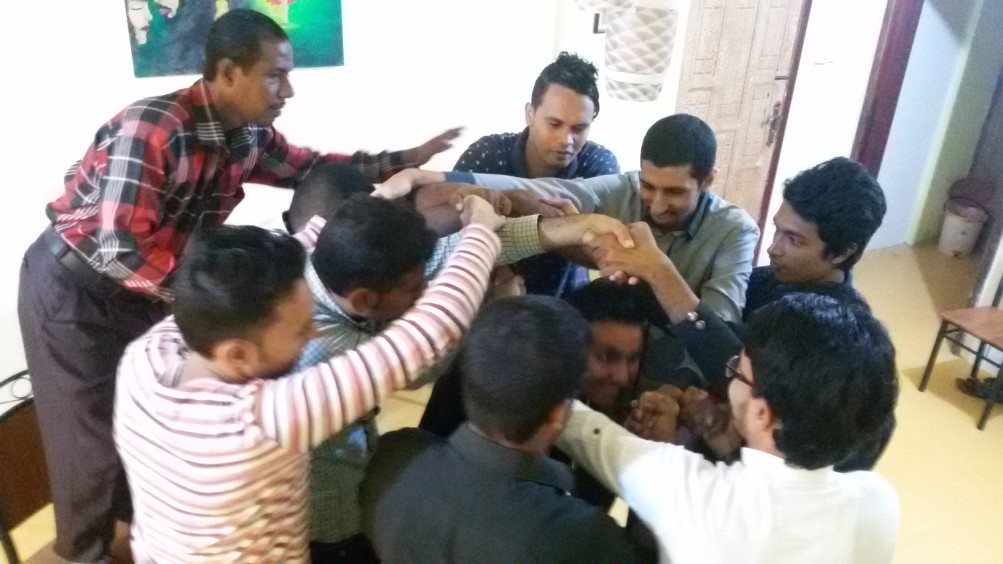
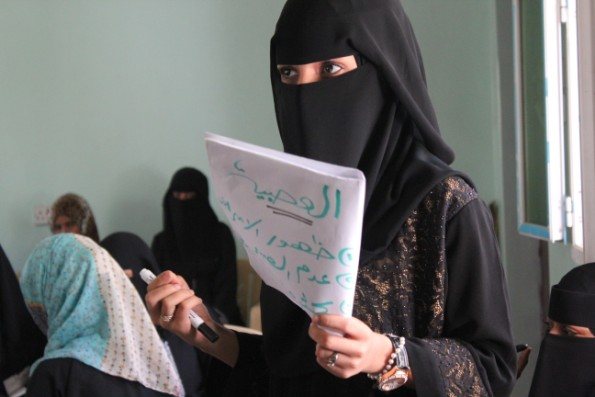
The program ran as three four-hour experiential sessions. It helped people listen rather than talk, understand rather than assume, manage anger, and resolve conflict before it escalated. It worked at three levels: preventing destructive conflict, managing emerging conflict, and seeking reconciliation where conflict had already turned violent. The curriculum was designed in Arabic, with a highly visual participant handbook produced entirely in Yemen so it could be used in communities with low literacy.
Built on local trainers
The heart of the model was young Yemeni community trainers. Within 30 days of signing the contract, CPS had designed a contextual program, trained the first group of trainers and launched in the community. In 2012 alone, 75 young people completed a three-week intensive Train the Trainer program and then received ongoing coaching, monthly workshops and close support from district coordinators who attended every session.
Because the political climate made people wary of private gatherings, we worked through trusted local institutions instead: universities, schools, private institutes and community associations. These hosts provided the venue and often the participants. CPS provided the trainers, materials and quality assurance.
Results
- 2012: 6,020 graduates, three months early. 304 groups across Aden, Lahej, Abyan internally displaced communities and Somali refugees, hosted by 54 local organisations. 94% of the 6,397 people who registered completed the course, well above the 80% that Aden's best institutes reported for fee-paying students. Participation was almost exactly balanced: 49% women and 51% men.
- 2013 to 2014: a further 6,000. The program was extended to another 6,000 people. Across 2012 to 2014, CPS trainers delivered more than 150,000 training hours through 60 local organisations.
- 2015: after the war. In November and December 2015, with funding from the Danish Refugee Council, CPS adapted the program to the experience of war and trained 897 people from host communities, internally displaced people and refugees in 52 groups. Women's demand was so strong that the planned 75:25 male-to-female ratio was changed to an even split.
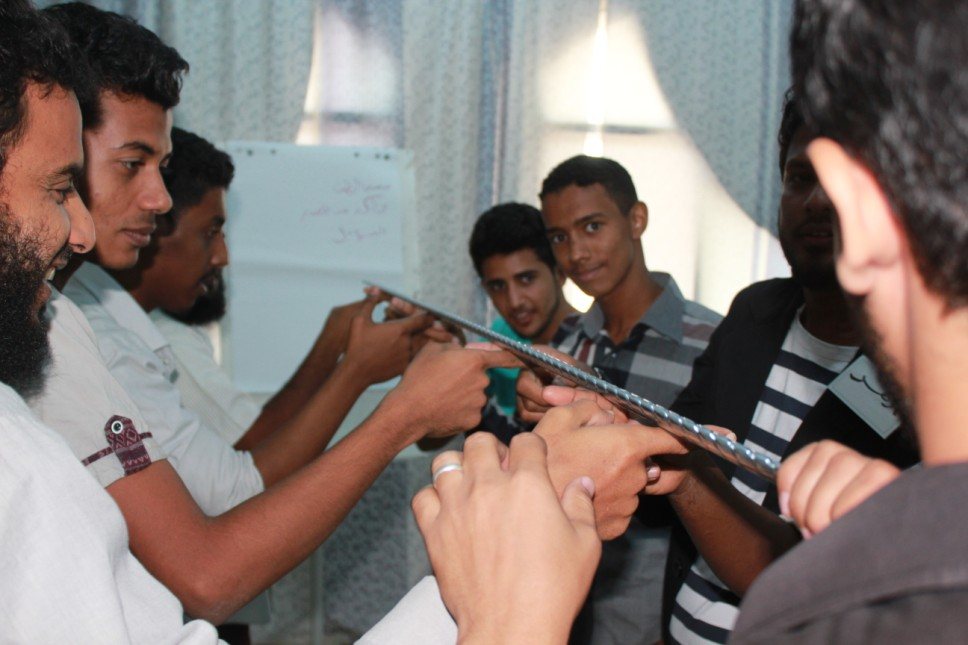
- Attitudes shifted. A simple “human ruler” exercise measured attitudes before and after. In 2012, attitudes moved by about 10% away from the belief that what was taken by force can only be restored by force. In 2015, participants' sense that they could manage their anger shifted by 19%, and their tendency to judge others before seeking to understand them shifted by 21%.
Stories from the field
The numbers tell only part of the story. Trainers shared what they saw:
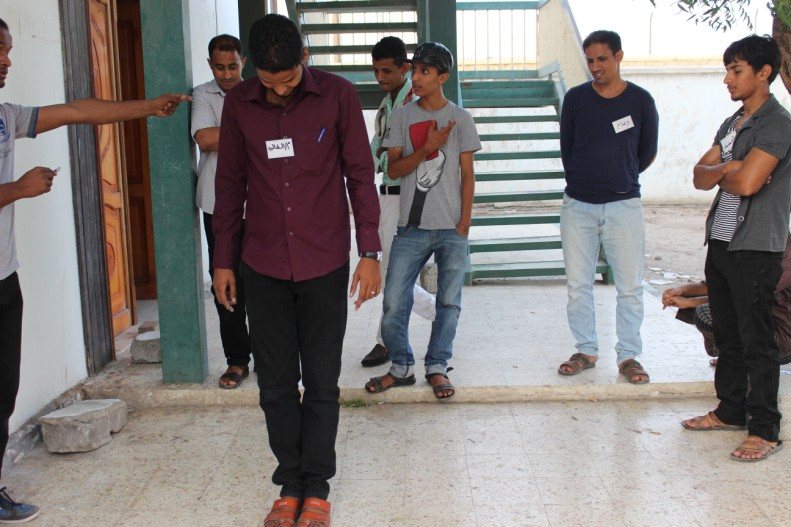
- One trainer's session at a school was stopped when armed men raided it and closed the building. Rather than give up, the group walked more than a kilometre in the heat to a nearby mosque and finished the training there.
- Two sisters, both trainers, hosted groups of more than 25 women and girls in their own home in Lahej, so that women who couldn't safely travel to a venue could still take part.
- A coordinator came across young Somali refugees running the course for each other outdoors, led by a past participant who wanted his friends to have the same experience.
Participants described changes in themselves and their relationships: learning to listen to both sides of a problem, to control their anger, not to judge people by how they look, and to share what they had learned with their families.
CPS is not just an efficient and cost-effective training organisation. CPS is about sustainable social change… In a vacuum of stability and security, given constancy and commitment, belief and trust will transcend mere experience and people will grow.
Henry Thompson, Project Manager, Danish Demining Group, Aden (2012)
What other organisations can take from it
Name it for the people
Frame the program around what participants care about, not the donor's language.
Train local trainers
Young local facilitators can reach people and places outsiders can't.
Work through trusted hosts
Local institutions bring credibility, safety and participants.
Measure attitudes, not just attendance
Simple, engaging tools can show whether minds are really changing.
Adapt to the context
Keep the core, and redesign quickly as circumstances change.
The same approach to conflict, trust and team performance shapes Potential2Performance's Team Effectiveness work today.